
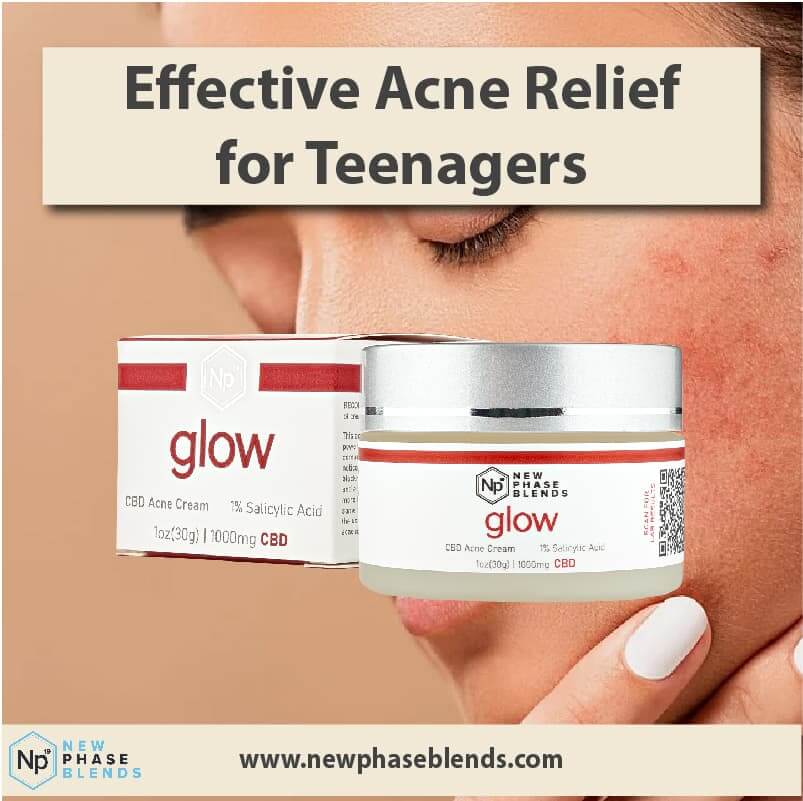
Important: This article is for educational purposes only and is not medical advice. Adolescent acne is treatable, and a primary-care provider or dermatologist can match treatment to severity. CBD is not approved by the FDA to treat acne. Adolescents who use any topical product, including CBD products, should do so with parental and clinician guidance.
Acne is one of the most common reasons adolescents see a dermatologist. Most teens have at least mild acne; a meaningful number have moderate-to-severe disease that produces scarring and distress without good treatment. The honest answer about CBD and teen acne is that CBD is not an approved acne treatment, and modern dermatology has well-evidenced options that work, including for severe disease.
The short version
- CBD is not a treatment for acne in teenagers or anyone else. No CBD product is FDA-approved for acne.
- Adolescent acne is treatable. Severity-matched care from mild (OTC retinoid + benzoyl peroxide) to severe (isotretinoin) produces meaningful results in most patients.
- Untreated severe acne can cause permanent scarring and significant psychological impact. Both are reasons to treat actively rather than wait for teens to “grow out of it.”
Why teen acne deserves active treatment
Some perspective on a few common assumptions:
- “Kids will grow out of it”: Many do, but in the meantime untreated severe acne can produce permanent scarring. Scars do not require severe disease — even moderate inflammatory acne can scar in some patients.
- “It’s just hormones”: Hormones are part of why adolescent acne develops, but that does not mean treatment doesn’t work. Treatments work regardless of the underlying hormonal context.
- “It’s vanity”: Adolescent acne is associated with measurable depression and anxiety in clinical studies. Treating it improves quality of life as well as skin.
What adolescent acne actually is
Acne in adolescence is driven primarily by androgen-mediated increases in sebum production combined with abnormal follicular keratinization, the bacterium Cutibacterium acnes, and inflammation. It typically presents on the face, chest, and back. Severity ranges from comedonal acne (blackheads and whiteheads only) through inflammatory papular-pustular acne to nodulocystic disease.
What evidence-based teen acne care looks like
Mild acne
- Topical retinoids: Adapalene 0.1% is available over the counter (Differin) and is first-line for almost any acne. Retinoids can be irritating initially; using every other night and pairing with non-comedogenic moisturizer helps tolerability.
- Benzoyl peroxide: Antibacterial and comedolytic. 2.5% or 5% formulations are typically as effective and less irritating than higher concentrations.
- Salicylic acid: Comedolytic, available in many OTC products.
- Daily sunscreen is important when using retinoids.
Moderate acne
- Combination topicals (retinoid + benzoyl peroxide; topical antibiotic + benzoyl peroxide)
- Oral antibiotics (doxycycline, minocycline, sarecycline) for limited courses, paired with topical benzoyl peroxide to limit antibiotic resistance
- Hormonal therapy in adolescent females in selected cases (combined oral contraceptives, spironolactone)
Severe or scarring acne
- Isotretinoin is highly effective for severe acne and can produce durable remission. It is a controlled medication in the U.S. (iPLEDGE program), with monitoring requirements. Female patients of reproductive potential have specific requirements because of teratogenicity. The medication has well-known side effects (dry skin and lips, photosensitivity, occasional mood changes, lab monitoring) but for severe disease the benefit-risk balance is often clearly favorable.
Why isotretinoin deserves a clear word
Isotretinoin (formerly known as Accutane) is sometimes treated as a feared last resort in popular conversation, including some social media. The clinical reality is more nuanced. For severe nodulocystic acne and for moderate acne that has not responded to other treatments, isotretinoin can:
- Produce durable remission in most patients
- Prevent permanent scarring
- Substantially improve quality of life
The medication has real side effects and requires monitoring, and it is not appropriate for every patient. But many adolescents whose lives are meaningfully affected by acne do well on it. The conversation belongs with a dermatologist, not in social media.
What CBD-and-acne research has examined
A 2014 in vitro study (Olah et al.) reported effects of CBD on cultured sebocytes. This is cell-culture work — interesting hypothesis-generating science, not clinical evidence in patients. There is no large randomized trial of CBD for acne, and no consumer CBD product is approved as an acne treatment.
Skincare basics for teens with acne
- Wash twice daily with a gentle cleanser; avoid harsh scrubbing
- Use non-comedogenic moisturizer, especially when using retinoids
- Daily sunscreen
- Avoid picking, which can produce post-inflammatory hyperpigmentation and scarring
- Be patient — most acne treatments take 8 to 12 weeks to show meaningful improvement
What the FDA has said
The FDA has not approved any CBD product for acne. The agency has been particularly active in pursuing companies marketing CBD products to or for adolescents.
What we offer at New Phase Blends
We make third-party-tested CBD products designed for general wellness use in adults. They are not formulated, tested, or marketed as treatments for acne or for adolescent use. If a teenager has persistent or severe acne, the right path is a clinical evaluation.
Frequently asked questions
Does CBD treat teen acne? No. CBD is not approved for acne, and the available research does not support marketing CBD products as acne treatments.
When should a teen see a dermatologist? Acne not responding to OTC topicals after 8 to 12 weeks, any nodular or scarring acne, acne causing significant distress, or acne in unusual locations or distributions all warrant dermatology evaluation.
Is isotretinoin safe for teens? It is widely used and often very effective. It has real side effects and requires monitoring. The conversation about whether it is appropriate belongs with a dermatologist who can match the medication to the specific patient.
Can diet cause acne in teens? Some adolescents are sensitive to high-glycemic-load diets and dairy in observational data. Diet typically matters less than effective topical and systemic treatments for moderate-to-severe acne.
Disclaimer: The statements made on this page have not been evaluated by the Food and Drug Administration. Our products are not intended to diagnose, treat, cure, or prevent any disease, including acne. The information here is for educational purposes only and is not a substitute for advice from a licensed medical professional.


