
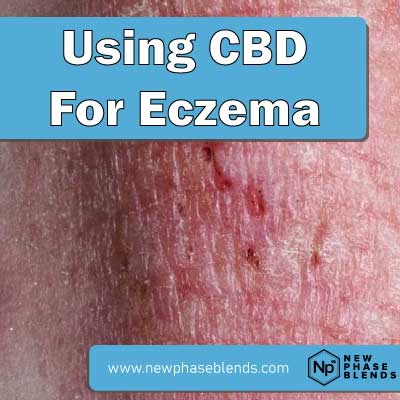
Important: This article is for educational purposes only and is not medical advice. Eczema (atopic dermatitis) is a chronic inflammatory skin condition that should be managed by a primary-care provider or dermatologist. CBD topical products are not approved by the FDA to treat eczema. Never replace prescribed eczema therapy with a supplement.
Eczema is one of the most common reasons people consider topical CBD products. The skin is intuitive — apply cream, see effect — and CBD has a “anti-inflammatory” reputation in wellness content. The honest answer is that there is real but very preliminary research on cannabinoid signaling in skin, and there is no consumer CBD product approved or proven to treat eczema. Modern eczema care has options that work.
The short version
- CBD is not a treatment for eczema. No CBD topical product is FDA-approved for atopic dermatitis or any inflammatory skin condition.
- Standard eczema care includes daily emollients, topical corticosteroids and topical calcineurin inhibitors for flares, and for moderate-to-severe disease newer biologic and small-molecule therapies (dupilumab, tralokinumab, JAK inhibitors).
- Some preclinical research has examined how cannabinoid signaling intersects with skin inflammation. This is laboratory-level work and does not establish that consumer CBD topicals affect eczema in patients.
What eczema actually is
Atopic dermatitis is a chronic, relapsing inflammatory skin condition characterized by itchy, dry, inflamed skin. It commonly begins in childhood and may persist into adulthood. The pathophysiology involves a defective skin barrier, immune dysregulation (Th2-skewed inflammation in particular), and often a genetic component (filaggrin gene mutations are well-established).
Eczema severity ranges from mild localized patches managed with moisturizers to severe disease that significantly impacts sleep, mood, and quality of life and warrants systemic therapy.
What CBD-and-eczema research has actually examined
Direct clinical research on consumer CBD topical products in eczema patients is sparse. There are some small studies and case reports describing self-reported improvement, but none has been large or rigorous enough to support a treatment claim.
Preclinical research has examined how the endocannabinoid system intersects with skin biology. Cannabinoid receptors are expressed in skin cells, and there is laboratory work on cannabinoid signaling in inflammation and barrier function. This is foundational science, not clinical evidence in humans.
What evidence-based eczema care looks like
The field has expanded considerably:
- Daily emollient use. Moisturizing twice daily, especially after bathing, is the foundation of all eczema care and reduces flare frequency.
- Trigger identification. Soap, detergents, fragrance, environmental allergens, stress, sweat, and certain foods (in some pediatric patients) can drive flares.
- Topical corticosteroids. Used for flares; potency matched to body location and severity; concerns about long-term use are real but generally manageable when used appropriately.
- Topical calcineurin inhibitors (tacrolimus, pimecrolimus). Steroid-sparing options for sensitive areas like face and skin folds.
- Crisaborole, ruxolitinib cream, and other newer topicals.
- Biologics for moderate-to-severe disease. Dupilumab (an anti-IL-4Rα antibody) has changed care for many patients. Tralokinumab and lebrikizumab are also available.
- JAK inhibitors. Oral options for moderate-to-severe disease in selected patients.
Drug-interaction considerations
Topical CBD has minimal systemic absorption compared to oral CBD, but interactions with topical medications used at the same site (corticosteroids, calcineurin inhibitors) have not been well studied. Discuss any topical product use with the dermatology team, particularly if you are using prescription topicals.
What the FDA has said
The FDA has not approved any CBD product for eczema or any dermatologic condition. The agency has issued warning letters to companies marketing CBD topicals with treatment claims; such marketing makes the product an unapproved new drug under federal law.
Talking to your dermatologist
If you have eczema and are curious about CBD topicals as part of a broader skincare routine, useful questions:
- Is my regimen optimized — am I using emollients consistently?
- Are there steroid-sparing options I have not tried?
- Am I a candidate for biologic or oral therapy?
- If I do try a CBD topical, where on my body and how often?
What we offer at New Phase Blends
We make third-party-tested CBD topical products designed for general wellness use. They are not formulated, tested, or marketed as treatments for eczema or any inflammatory skin condition. If you have eczema, please continue to follow the plan your dermatologist has built for you.
Frequently asked questions
Does CBD treat eczema? No. CBD topicals are not approved for eczema, and the available research does not support marketing CBD products as eczema treatments.
Are CBD creams a replacement for steroid creams? No. Topical corticosteroids have decades of evidence for eczema flares, and most patients who need them benefit substantially when used appropriately.
What about moisturizers? Daily emollient use is the foundation of eczema care, regardless of any other product. Many products work; the best one is the one you will actually use consistently.
Could a CBD topical irritate my skin? Possibly. Eczema-prone skin can react to fragrance, preservatives, or carrier ingredients in any product. If you try one, patch test on a small area first.
Disclaimer: The statements made on this page have not been evaluated by the Food and Drug Administration. Our products are not intended to diagnose, treat, cure, or prevent any disease, including eczema or any inflammatory skin condition. The information here is for educational purposes only and is not a substitute for advice from a licensed medical professional.


