

In this article, we take an in-depth look into any possible interactions between CBD and the dreaded COVID 19 virus. We’ll also go over common misconceptions about CBD use and COVID, and the accuracies as well – if there are any.
**None of the statements on this web site have been evaluated by the FDA. These statements have not been evaluated by the Food and Drug Administration. These products are not intended to diagnose, treat, cure, or prevent any diseases – especially COVID 19.**
COVID 19 brought a huge change to the United States in 2020. With that change came many different approaches to immune system reinforcement/treatment, and interestingly enough, studies show that CBD may aid in just that.
Viral entry of COVID into the human body is quick, and sometimes deadly. Infecting human cells happens rapidly, as we saw in the beginning of 2020.
Imagine that…
CBD and COVID 19 – The Misconceptions
There are a lot of misconceptions about using CBD for COVID treatment/management. In this section, we’re going to go over these inaccuracies so you know the truth about how cannabinoids, like CBD, interact with COVID.
Most people are familiar with CBD because of the anti inflammatory properties it potentially brings people. Anti-inflammatory properties are only one of several potential health benefits of CBD, or cannabidiol.
Go ahead and check out the video above if you aren’t very familiar with CBD yet. It will get you up to speed.
CBD Does Not Cure/Prevent COVID
I want to first state that there is no legitimate, peer reviewed evidence that suggests CBD, or any other cannabinoid within cannabis can cure COVID host cells. If this were the case, don’t you think CBD would be all over the news and part of major pharmaceutical COVID campaigns?

The CBD industry has many companies that claim CBD can basically do everything (which is a lie). Some of them even claim CBD can cure COVID. It cannot.
Companies like this are responsible for the CBD comparison to snake oil. These companies give false expectations just to get the sale, then CBD ‘doesn’t work.’ It’s not fair to the customer, and it’s not fair to legitimate CBD organizations, like New Phase Blends.
With that out of the way, let’s talk about some more misconceptions about CBD and COVID viruses.
2022 Update: A Study From Oregon State University
Researchers at the Oregon State University lab discovered that some plant-based chemicals within industrial hemp (cannabis sativa) are capable of preventing viral entry of COVID-19 to human cells.
There aren’t many studies that use human cells when referencing CBD. The fact that this study uses human cells is a big deal. Prevention strategies of COVID into the human body are needed right now.
The published these findings in the Journal of Natural Products.
This is a massive discovery.
What, exactly, are the plant-based chemicals, though?
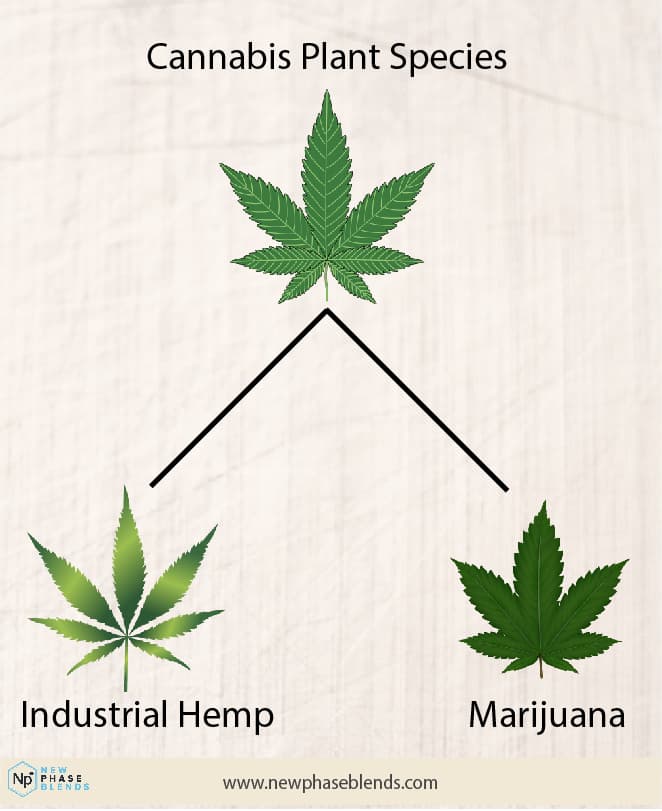
Industrial hemp (cannabis Sativa extracts) and marijuana both make up the cannabis plant species. Both plants are identical, except for one key different: marijuana plants contain large amounts of THC, while the hemp plant does not.
Scientists found that some acidic forms of cannabinoids (cannabis compounds):
“bind to the SARS-CoV-2 spike protein, blocking a critical step in the process the virus uses in infecting human cells. Our data show CBDA and CBGA are effective against the two variants we looked at, and we hope that trend will extend to other existing and future variants.”
Richard Van Breemen explained the research “showed the hemp compounds were equally effective against the alpha and beta variants of COVID-19.”
CBD and THC are both cannabinoids. There are roughly 124 different known cannabinoids. These cannabinoids are simply cannabis compounds.
The acidic forms references in the study were cannabigerolic acid (CBGA) and cannabidiolic acid, or CBDA.
Derivatives of CBD May Stop/Slow Down Transmission
According to the study above, these acid forms of CBD and CBG appear to stop, or at least slow down the transmission of the virus.
These acidic derivatives of cannabinoids are actually quite numerous in cannabis sativa extracts. The main difference between CBD and CBDA is that CBDA converts into CBD throughout the manufacturing process.
The same can be said when comparing CBG and CBGA.
While over the counter CBD products may contain CBGA and CBDA, you aren’t likely to find them in very high amounts. Even medical cannabis isn’t likely to have a significant amount.
CBD Does Not Shorten the Sick Time
If you take CBD, it will not aid in shortening the time you are sick.
Viruses work by first, getting into your body. In the case of COVID, this seems to be having a close proximity to someone who has COVID. They can breathe on you, cough on you, and maybe even touch you – these would all result in a possible spread of the VIRUS.
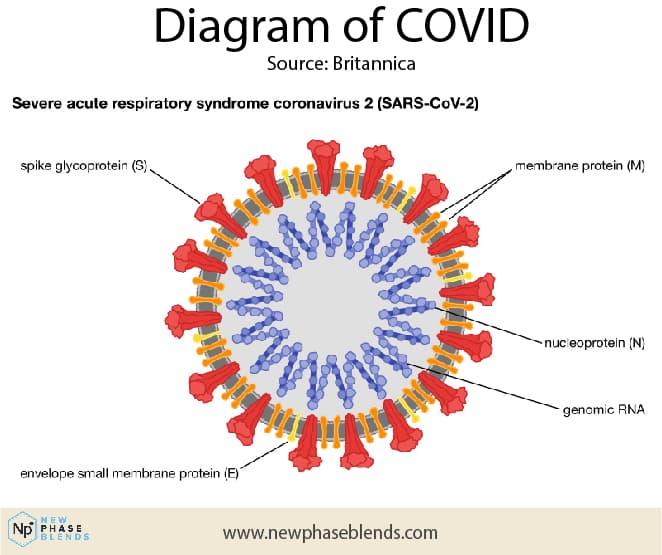
First, you get a viral infection. Then, your body begins to fight it off and build antibodies in cells to prevent it from being able to continue to infect you. This process takes time, and using CBD for COVID does not shorten this time.
Your white blood cells are fighting infections. At the same time, antibodies build in the cells that were already infected. CBD doesn’t appear to aid in either of these situations.
CBD and COVID 19 – Accuracies
Some of the accurate statements around COVID and CBD revolve around the studies on cannabis, as a whole – not simply CBD.
CBD is one of 124 cannabis compounds within the cannabis plant species. That being said, CBD could be the culprit, but so could 123 other different cannabinoids. We don’t know for sure, but some studies still claim that CBD can prevent the infection of SARS-COV-2 infections.
Look at this study from the journal Bio RXiv: “Here we report that cannabidiol (CBD), a compound produced by the cannabis plant, inhibits SARS-CoV-2 infection.”
CBGA and COVID 19
Accurate Statements on COVID and CBD/Cannabis
- Researchers in the US recently conducted a study which disclosed that a cannabis plant compound inhibited infection with severe acute respiratory syndrome coronavirus 2 (SARS-CoV-2) in human lung cells. Study link here.
- Through the combination of CBD and 7-OH-CBD, the expression of certain genes within the viral cells were inhibited. Furthermore, changes in gene expression within the lung cells that resulted from the presence of COVID-19 were reversed. Study link here.
- Another critical finding is that CBD had “effectively reversed” the triggering of a hyperinflammatory response. This is a “cytokine storm”. The presence of the virus triggers it. It restores cells not only to a pre-viral level of inflation, but a state as if the cells had been treated with only CBD. Study link here.
Can CBD Prevent COVID?
The honest answer, at this point, is that there isn’t enough evidence to support this claim.
Many different studies show that CBD has somewhat of a positive effect on the immune system. However, exactly what that effect is and how CBD use can trigger it still needs more research. This is definitely a good first sign in the initial stages of studies, though.
We do know that CBD interacts with our Endocannabinoid System, or ECS. This bodily system has different kinds of receptors. These are the receptors CB1 and CB2.
Endogenous cannabinoids anandamide (AEA) and 2-arachidonoylglycerol (2-AG) and enzymes are also part of this system. AEA and 2AG may influence the production of some of these endocannabinoids.
All of these work together to do many different things. It seems that immune system reinforcement is one of these positive effects.
Conclusion | CBD and the Human Immune System
I know this article was a little more science-heavy than usual. It’s important we are very careful when talking about CBD and COVID. I don’t want anyone to get the wrong impression.
New Phase Blends is not a CBD company that will tell their clients anything just to get a sale. This wonderful, plant-based chemical, just may offer a lot of benefits to us, if we take it daily.
CBD and the Immune System
- It may keep our immune system in harmony via the reduction in activity of T cells, B cells, and both T helper and T cytotoxic lymphocyte subsets (Ignatowska-Jankowska B, Jankowski M, Glac W, Swiergel AH).
- CBD may enhance properties of healthy lungs. This includes a decrease in complete lung resistance and elastance, leukocyte movement, myeloperoxidase movement in lung tissue, and protein expression. It keeps healthy amounts of cytokines (TNF and IL-6) and chemokines (MCP-1 and MIP-2). This basically means it may aid in respiratory function, as a whole (Ribeiro A, Almeida VI, Costola-de-Souza C, et al).
- Like endogenous cannabinoids, CBD also may support a healthy intestinal inflammatory response in human trials. If your gut is healthy, your body will likely maintain a more positive health track (Irving PM, Iqbal T, Nwokolo C, et al).

If you found this article interesting, please subscribe via the footer of any page on this website. I look forward to producing more interesting content about hemp plants, CBD, and
Please note that the FDA has not approved CBD products for use as dietary supplements, yet. For this reason, no medical claims can be made in regards to CBD oil and health benefits.
References
Ignatowska-Jankowska B, Jankowski M, Glac W, Swiergel AH. Cannabidiol-induced lymphopenia does not involve NKT and NK cells. J Physiol Pharmacol. 2009 Oct;60 Suppl 3:99-103.
Irving PM, Iqbal T, Nwokolo C, et al. A Randomized, Double-blind, Placebo-controlled, Parallel-group, Pilot Study of Cannabidiol-rich Botanical Extract in the Symptomatic Treatment of Ulcerative Colitis. Inflamm Bowel Dis. 2018 Mar 19;24(4):714-24.
Ribeiro A, Almeida VI, Costola-de-Souza C, et al. Cannabidiol improves lung function and inflammation in mice submitted to LPS-induced acute lung injury. Immunopharmacol Immunotoxicol. 2015 Feb;37(1):35-41.