
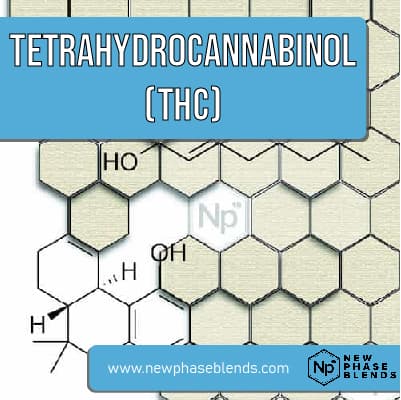
Of all the cannabinoids in cannabis, one stands above the rest in terms of cultural recognition, legal controversy, and pharmacological significance: delta-9-tetrahydrocannabinol, universally known as THC. It is the compound responsible for the “high” associated with cannabis use, and it is also the basis of multiple FDA-approved pharmaceutical drugs used for nausea, appetite loss, and pain.
Understanding THC means understanding both its power and its complexity. It is simultaneously a medicine, a recreational substance, a subject of ongoing clinical investigation, and one of the most politically contested molecules in history. This guide focuses on what the science actually says.
What Is THC?
Delta-9-tetrahydrocannabinol (Δ9-THC) is the principal psychoactive phytocannabinoid in Cannabis sativa L. It is one of approximately 113 identified cannabinoids in the plant and the primary compound responsible for cannabis’s intoxicating effects (Chandra et al., 2020). THC does not exist in the living plant in significant amounts — the plant produces its acidic precursor, delta-9-tetrahydrocannabinolic acid (THCA), which converts to THC through decarboxylation when exposed to heat or light (MedPro Cannabis, 2026).
CAS Number: 1972-08-3
Molecular Formula: C₂₁H₃₀O₂ / Molecular Weight: 314.46 g/mol
First isolated: 1964 (Gaoni & Mechoulam)
Primary mechanism: CB1 and CB2 receptor partial agonist
Psychoactive: Yes — primary intoxicating cannabinoid
FDA-approved forms: Dronabinol (Marinol, Syndros), Nabilone (Cesamet)
Legal status (US): Schedule I federally; legal in many states for medical/recreational use
A Brief History of THC
Cannabis has been used medicinally and ceremonially for approximately 5,000 years, but the identity of its active compound remained unknown until the modern era. In 1964, Israeli chemist Raphael Mechoulam and colleague Yechiel Gaoni at the Hebrew University of Jerusalem achieved the first isolation, complete structural elucidation, and partial synthesis of delta-9-THC — published in the Journal of the American Chemical Society as “Isolation, structure and partial synthesis of an active constituent of hashish” (Pertwee, 2006; Hempshopper, 2021).
This breakthrough transformed cannabis research. Mechoulam’s work over the following decades — including the discovery of the endocannabinoid anandamide in 1992 — established the scientific framework for understanding how THC works in the human body. The first CB1 receptor was discovered in 1988, finally explaining at a molecular level why THC produces its characteristic effects (Pertwee, 2006).
On the pharmaceutical side, synthetic THC (dronabinol) received FDA approval in 1985 under the brand name Marinol for chemotherapy-induced nausea and vomiting, and later for AIDS-related anorexia. Nabilone (Cesamet), another synthetic THC analog, received separate FDA approval for chemotherapy nausea. Nabiximols (Sativex) — a botanical extract containing THC and CBD — is approved in numerous countries outside the US for multiple sclerosis-related spasticity and neuropathic pain (Pertwee, 2006; Di Marzo et al., 2022).
Chemistry and Structure
THC belongs to the classical cannabinoid structural class — a terpenophenolic compound with a cyclohexenyl terpene moiety and a pentyl side chain. Its molecular formula is C₂₁H₃₀O₂, identical to CBD, but its three-dimensional structure differs fundamentally — specifically, THC has a closed pyran ring that CBD lacks, and this structural difference is what gives THC its high CB1 receptor affinity and psychoactivity (Chandra et al., 2020).
THC is highly lipophilic, accumulates in fatty tissues, and has a prolonged elimination half-life compared to most drugs — between 20 hours in occasional users and several days in heavy, chronic users. This tissue accumulation explains why THC metabolites can be detected in urine tests for weeks after last use (Wikipedia contributors, 2025).
How THC Works: CB1 and CB2 Receptor Partial Agonism
THC’s primary mechanism of action is as a partial agonist at both CB1 and CB2 cannabinoid receptors — the two receptors that form the core of the endocannabinoid system. “Partial agonist” means it activates these receptors but cannot induce their full maximal response, unlike a full agonist (Chandra et al., 2020).
CB1 receptors are concentrated in the brain and central nervous system — particularly in the prefrontal cortex (executive function), hippocampus (memory), basal ganglia (motor control), cerebellum (coordination), and the limbic system (emotion and reward). CB1 activation by THC is what produces the characteristic psychoactive effects: euphoria, altered perception, appetite stimulation, impaired short-term memory, and changes in mood and cognition (Bloomfield et al., 2019).
CB2 receptors are expressed primarily in immune cells and peripheral tissues. THC’s CB2 activity contributes to its anti-inflammatory and immunomodulatory effects without producing psychoactive consequences (Chandra et al., 2020).
Beyond cannabinoid receptors, THC also interacts with TRPV1 ion channels (pain and temperature sensing), GPR55, and modulates the glutamatergic, GABAergic, and dopaminergic neurotransmitter systems indirectly — the latter explaining THC’s effects on reward and the dopamine release associated with its reinforcing properties (Bloomfield et al., 2019).
Pharmacokinetics: How the Body Processes THC
THC’s pharmacokinetics are strongly influenced by the route of administration, making onset, intensity, and duration highly variable across delivery methods.
| Route | Bioavailability | Onset | Duration |
|---|---|---|---|
| Inhalation (smoking/vaping) | 10–35% | Seconds to minutes | 2–4 hours |
| Oral (edibles/capsules) | 4–12% (highly variable) | 30 min – 2 hours | 4–8 hours |
| Sublingual | ~15% | 15–45 minutes | 4–6 hours |
| Transdermal patch | Variable | Hours (slow release) | 12–48 hours |
When ingested orally, THC undergoes extensive first-pass metabolism in the liver, where it is converted to 11-hydroxy-THC — a metabolite that is actually more potent than THC itself and crosses the blood-brain barrier more readily. This is why edibles often produce more intense and longer-lasting effects than inhalation at the same THC dose (Wikipedia contributors, 2025). THC is ultimately metabolized to 11-nor-9-carboxy-THC (THC-COOH), the primary inactive metabolite detected in drug tests, which can persist in urine for days to weeks.
Therapeutic Applications and FDA-Approved Uses
FDA Approved Chemotherapy-Induced Nausea and Vomiting
Dronabinol (synthetic THC, brand name Marinol/Syndros) was approved by the FDA in 1985 for chemotherapy-induced nausea and vomiting in patients who had not responded adequately to conventional antiemetics. Nabilone (Cesamet), a synthetic THC analog, received separate FDA approval for the same indication (Wikipedia contributors — Dronabinol, 2025; Di Marzo et al., 2022).
FDA Approved AIDS-Related Anorexia
Dronabinol received a second FDA approval in 1992 for appetite stimulation and weight gain in patients with HIV/AIDS-related anorexia — leveraging THC’s well-established ability to stimulate appetite through CB1 receptor activation in the hypothalamus (Wikipedia contributors — Dronabinol, 2025).
Approved Outside US Multiple Sclerosis Spasticity and Pain
Nabiximols (Sativex) — an oromucosal spray containing a 1:1 ratio of THC and CBD extracted from cannabis — is approved in more than 25 countries for treating spasticity and neuropathic pain associated with multiple sclerosis. It is not FDA-approved in the United States but is under investigation (Di Marzo et al., 2022).
Moderate Evidence Chronic Pain
A 2022 review found substantial evidence for THC/CBD combination medicines in chronic pain — particularly neuropathic and nociplastic pain — with a good tolerability profile relative to opioid analgesics and negligible dependence and abuse potential at therapeutic doses (Aviram & Samuelly-Leichtag, 2022). Standalone THC evidence for pain is also growing, though study quality varies. A 2024 clinical overview noted that recent trials show diverse pharmacologic potentials for THC in pain management but identified methodological limitations including small samples and short durations (Cuttler et al., 2024).
Moderate Evidence Sleep
THC has demonstrated sleep-promoting properties in multiple studies, primarily through CB1-mediated sedation and reduction of REM sleep. Clinical reviews have rated THC/CBD combinations as having substantial evidence for improving subjective sleep quality (Aviram & Samuelly-Leichtag, 2022).
Emerging Evidence Neurological Conditions
THC has shown potential in preclinical and early clinical research for Huntington’s disease, Parkinson’s disease, and Alzheimer’s disease — primarily through neuroprotective, anti-inflammatory, and antioxidant mechanisms. A 2024 clinical overview noted promising findings in these areas while flagging significant methodological limitations in available trials (Cuttler et al., 2024).
Risks, Side Effects, and Contraindications
THC’s therapeutic profile cannot be discussed without equal attention to its well-documented risks. Unlike CBD, THC is psychoactive and has established potential for adverse effects and, in susceptible individuals, dependence.
Acute side effects include impaired short-term memory and cognitive function, anxiety and paranoia (especially at high doses), increased heart rate, dry mouth, red eyes, impaired coordination and reaction time, and in some cases, psychosis-like symptoms (Bloomfield et al., 2019).
Chronic and long-term risks are more significant. Heavy cannabis use — particularly during adolescence when the brain is still developing — has been associated with adverse effects on executive function, memory, and emotional processing, as well as increased risk of cannabis use disorder and, in genetically predisposed individuals, psychotic disorders including schizophrenia (Bloomfield et al., 2019). The risk of psychosis appears dose-dependent and is substantially higher with high-potency products.
Legal Status
THC remains a Schedule I controlled substance under U.S. federal law — classified as having high abuse potential and no accepted medical use at the federal level, despite the existence of FDA-approved THC-based pharmaceuticals. This legal contradiction exists because dronabinol (pharmaceutical THC) is separately scheduled as Schedule III (Pertwee, 2006).
At the state level, as of 2025, the majority of U.S. states have legalized THC for either medical use, recreational use, or both. Federal and state law remain in conflict, creating a complex regulatory environment for research, commerce, and individual rights.
Frequently Asked Questions
What is the difference between THC and CBD?
Both are phytocannabinoids from cannabis with the same molecular formula (C₂₁H₃₀O₂), but their three-dimensional structures differ. THC directly activates CB1 receptors, producing psychoactive effects. CBD has weak CB1 affinity and does not produce intoxication. CBD can also partially counteract some of THC’s adverse effects, including anxiety (Bloomfield et al., 2019).
Why do edibles hit harder than smoking?
When THC is consumed orally, it passes through the liver where it’s converted to 11-hydroxy-THC — a metabolite more potent than THC itself that crosses the blood-brain barrier more effectively. Inhaled THC bypasses this conversion. Combined with the delayed onset of edibles (up to 2 hours), this often leads to accidental overconsumption and more intense effects than anticipated (Wikipedia contributors, 2025).
How long does THC stay in your system?
THC metabolites (primarily THC-COOH) can be detected in urine for 3–4 days in occasional users, 5–7 days in moderate users, 10–15 days in daily users, and more than 30 days in heavy chronic users. THC’s high lipophilicity causes it to accumulate in fat tissue, extending its detectability significantly compared to water-soluble drugs (Wikipedia contributors, 2025).
Is THC addictive?
Yes — cannabis use disorder is a recognized clinical condition characterized by tolerance, withdrawal symptoms (irritability, sleep disruption, appetite changes), and difficulty reducing use. Approximately 9% of people who try cannabis develop dependence; the rate rises to around 17% among those who begin use in adolescence (Bloomfield et al., 2019). However, at therapeutic doses used in pharmaceutical formulations, the abuse and dependence potential is considerably lower.
Can THC be used medically?
Yes. The FDA has approved dronabinol (synthetic THC) for chemotherapy-induced nausea and vomiting and AIDS-related anorexia. Nabilone (a synthetic THC analog) is also FDA-approved for chemotherapy nausea. Nabiximols (THC + CBD) is approved in over 25 countries for multiple sclerosis symptoms. Beyond these approved uses, substantial evidence supports THC’s role in chronic pain management and sleep (Di Marzo et al., 2022; Aviram & Samuelly-Leichtag, 2022).
The Bottom Line
THC is one of the most pharmacologically significant and thoroughly studied molecules of the 20th and 21st centuries. Its discovery triggered an entire new field of biological science — cannabinoid pharmacology — and led directly to the identification of the endocannabinoid system, one of the body’s most important regulatory networks.
Its therapeutic applications are real and FDA-validated in specific contexts. Its risks are also real — particularly with high-potency products, chronic heavy use, adolescent exposure, and in individuals with psychiatric vulnerabilities. THC is not inherently dangerous, and it is not without medical value. It is a potent pharmacological agent that demands respect, informed use, and continued research.
As policy catches up with science and research restrictions ease, the next decade will likely produce substantially more rigorous clinical evidence — and a clearer picture of exactly where THC fits in medicine and public health.
Nothing in this article constitutes medical advice. Always consult a qualified healthcare provider before making any decisions about supplementation or treatment.
References
- Aviram, J., & Samuelly-Leichtag, G. (2022). Efficacy of cannabis-based medicines for pain management: A systematic review and meta-analysis of randomized controlled trials. Journal of Clinical Medicine, 11(22), 6802. https://doi.org/10.3390/jcm11226802
- Bloomfield, M. A. P., Hindocha, C., Green, S. F., Wall, M. B., Lees, R., Petrilli, K., Costello, H., Tulloch, E., Freeman, T. P., & Curran, H. V. (2019). The neuropsychopharmacology of cannabis: A review of human imaging studies. Pharmacology & Therapeutics, 195, 132–161. https://doi.org/10.1016/j.pharmthera.2018.10.006
- Chandra, S., Radwan, M. M., Majumdar, C. G., Church, J. C., Freeman, T. P., & ElSohly, M. A. (2020). New trends in cannabis potency in USA and Europe during the last decade (2008–2017). European Archives of Psychiatry and Clinical Neuroscience, 269(1), 5–15. https://doi.org/10.1007/s00406-019-00983-5
- Cuttler, C., Mischley, L. K., & Sexton, M. (2024). Δ9-Tetrahydrocannabinol (THC): A critical overview of recent clinical trials and suggested guidelines for future research. Journal of Clinical Medicine, 13(6), 1540. https://doi.org/10.3390/jcm13061540
- Di Marzo, V., Piscitelli, F., & Mechoulam, R. (2022). Cannabinoids: Therapeutic use in clinical practice. International Journal of Molecular Sciences, 23(7), 3671. https://doi.org/10.3390/ijms23073671
- Hempshopper. (2021, May 19). 1964: The discovery of THC is first described. https://hempshopper.com/hemp-history/1964-the-discovery-of-thc-was-first-described/
- MedPro Cannabis. (2026, February 26). THC compound: Why everyone gets this wrong about cannabis. https://www.medprocannabis.com/thc-compound-explained-structure-formula-and-effects/
- Pertwee, R. G. (2006). Cannabinoid pharmacology: The first 66 years. British Journal of Pharmacology, 147(S1), S163–S171. https://doi.org/10.1038/sj.bjp.0706406
- Wikipedia contributors. (2025). Tetrahydrocannabinol. Wikipedia, The Free Encyclopedia. https://en.wikipedia.org/wiki/Tetrahydrocannabinol
- Wikipedia contributors. (2025). Dronabinol. Wikipedia, The Free Encyclopedia. https://en.wikipedia.org/wiki/Dronabinol


